Indeed Flex
- 4.4
- Rating
- 1.00M
- Installs
- Free
- Price
 Analysis by App-foxy
Finding flexible work is not only about seeing an open shift and pressing a button. The real test is whether an app helps me understand the opportunity, decide if it fits my circumstances, and complete the process without unnecessary confusion. Indeed Flex is a business app from Indeed Flex built around flexible staffing, and my experience with it is best understood through that practical lens: it can make shift-based work more approachable, but the value depends heavily on how clearly each opportunity is presented and how well the workflow matches the way I need to work.
The app is free, aimed at everyone, and has grown into a widely used service with over one million installs. Its average rating is 4.3 from around seven thousand ratings, which suggests that many people find the basic idea useful while also leaving room for individual experiences to vary. I would recommend trying it to someone looking for temporary, part-time, or changing work patterns, especially if a conventional job-search site feels too slow. I would be more cautious for anyone who needs highly predictable hours, extensive support before applying, or a single permanent employer.
How clearly the app supports different people and working situations
I look at this section through a practical question: can people with different schedules, access needs, and comfort levels make a well-informed choice here? Flexible staffing may suit someone balancing study or family commitments, yet the same quick-moving workflow can be harder for a person who needs predictable hours or time to review details. That distinction matters when deciding whether this app fits your working life, rather than simply whether it is easy to open.
You May Also Like

 Blood Strike: 2.5 Anniversary
Blood Strike’s Loadouts Turn Every Drop Into a Tactical Gamble
A close look at Blood Strike’s custom loadouts: how fast access to signature weapons reshapes its battle royale rhythm, rewards preparation, and narrows the gap between fights.

 Pandora - Music & Podcasts
Pandora’s Music Is Easy to Start, but Harder to Recover
Pandora’s strength is its low-effort path from a seed to a station. Its weak spot is how much confidence it asks you to place in connection, setup, and quiet recovery.

 8 Ball Pool
 Is Built on Rivalries, Rematches, and Routine
A close look at the rivalries, rematches, shared routines, and unanswered safety questions that turn a quick pool match into a persistent mobile community.

 Samsung Music
’s Quiet Strength Is Playing What You Already Own
Its reach comes less from spectacle than from dependable access to a personal library. That simplicity is both the app’s strongest retention engine and its ceiling.

 AccuWeather: Weather Radar
AccuWeather Review: A Quick, Clear Forecast for Everyday Decisions
For everyday plans, the best forecast is the one you can understand quickly. AccuWeather makes rain timing, radar, and local conditions easy to act on, with a few trade-offs.

 Hill Climb Racing
Why Hill Climb Racing Still Turns Crashes Into One More Run
A tiny car, a bumpy hill and one more upgrade: Hill Climb Racing keeps resurfacing because its simple chaos makes every near-miss feel personal.
More From Our News Desk



Readability and navigation during a busy job search
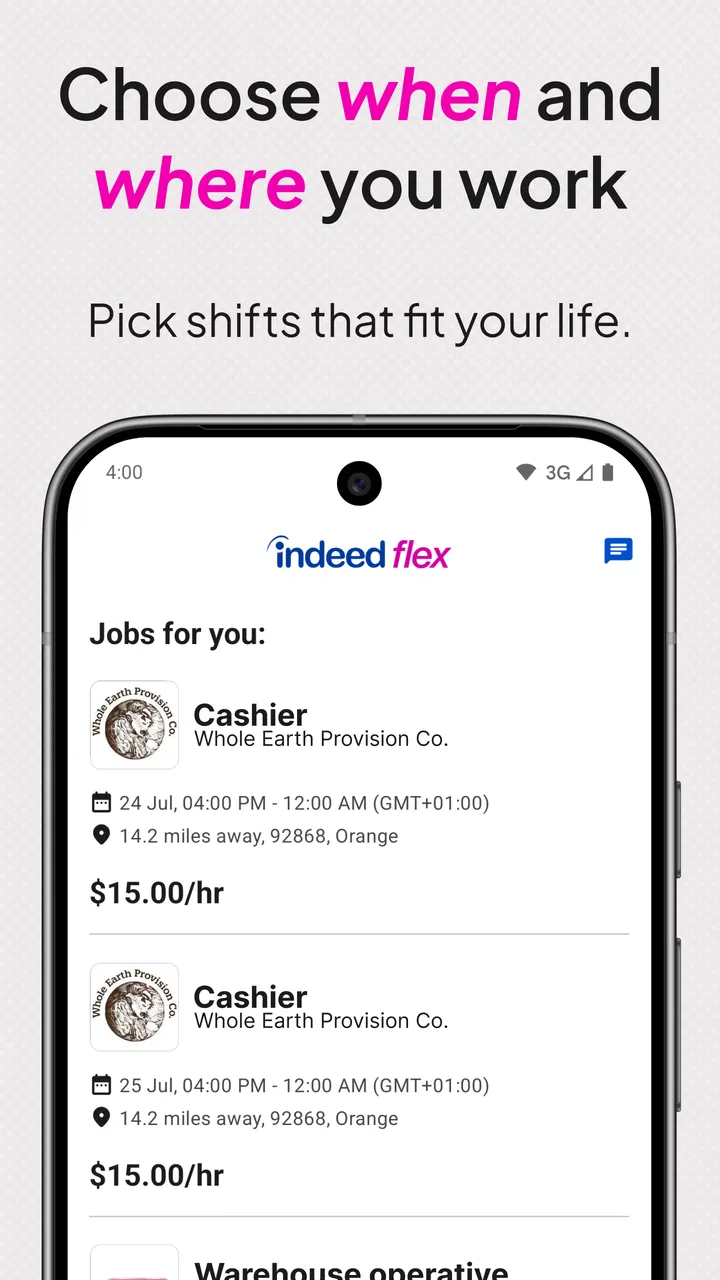
The most important accessibility feature in a staffing app is not decoration; it is the ability to understand what needs attention. When I am checking work opportunities between errands or during a short break, I want the main actions to feel obvious: review a shift, understand its requirements, decide whether it suits me, and move on. Indeed Flex is strongest when it keeps that decision-making path direct rather than making me search through unrelated employment information.
That simplicity matters for people who are new to flexible staffing. A person who has only used traditional job boards may not immediately know how shift-based work differs from applying for a standard vacancy. The app’s focused purpose helps reduce that learning curve. Instead of treating every opportunity as a long application project, it encourages a more immediate assessment of availability and suitability.
Even so, flexible work creates a readability challenge that ordinary job boards do not always have. A user needs to distinguish between the role itself, the time commitment, the location, and any practical expectations before accepting anything. I would slow down and read the complete opportunity rather than relying on a quick glance at the first visible details. This is especially important for someone with dyslexia, attention difficulties, limited English confidence, or a cognitive condition that makes dense employment information harder to process.
My useful habit is to review opportunities when I am not rushed, then keep a simple personal note of the shifts I am considering. That separates reading from deciding. It also reduces the chance of accepting a shift simply because the app made it easy to act quickly. Fast navigation is helpful only when the information remains easy to verify.
What the interface means for different abilities
People with visual impairments, reduced contrast sensitivity, migraines, or screen fatigue may experience the app differently from someone who can scan a phone comfortably. I would check the app alongside the phone’s own display and text settings, using larger text or stronger contrast where the operating system supports it. Those adjustments can make a practical difference, although they cannot fix every design issue if labels become crowded or important details are visually separated.
For users who rely on screen readers, the quality of the experience depends on whether controls and shift information are announced in a logical order. I cannot treat compatibility as guaranteed simply because the app is available on a modern phone. A sensible first step is to open an opportunity, move through it with the device’s accessibility tools, and confirm that the essential details can be reached without relying on visual positioning. If a critical requirement is unclear when read aloud, I would not accept the shift until I had another way to verify it.
Indeed Flex is currently version 76.8.0 (838), and it runs on Android 8.0 or later. That broad operating-system reach is useful for people who keep an older phone rather than replacing it frequently. It also means that users should keep their device software and the app itself reasonably current when possible, since an older handset can make any employment workflow feel slower or less comfortable. The version information is practical rather than glamorous, but it matters to anyone using a budget phone or sharing access to a device.
People with motor difficulties may prefer a workflow that does not demand precise taps, rapid gestures, or repeated corrections. I would use the app with the phone held securely, enlarge touch targets through the device where possible, and avoid making decisions while walking or carrying something. A user with tremors or limited dexterity may need extra time to check that a selection was registered correctly. That is not a reason to dismiss the app, but it is a reason to treat confirmation screens and final review as essential rather than optional.
When flexible staffing helps in real life
The clearest use case is someone whose availability changes from week to week. Imagine a parent whose childcare is confirmed only a few days ahead, a student with a timetable that changes by term, or a worker combining several sources of income. In that situation, a flexible staffing platform can be more realistic than sending applications to employers who expect fixed availability. I would use Indeed Flex to look for work around the commitments that are already certain, not as a substitute for planning.
Another useful situation involves someone returning to work after a break. Shorter or occasional opportunities may feel less intimidating than committing immediately to a full schedule. The app can serve as a way to explore what kinds of work fit a person’s energy, transport, and confidence. That can be valuable for someone managing a health condition, provided they are honest with themselves about fatigue and recovery time rather than treating every open shift as an obligation.
It may also suit people who dislike the waiting involved in conventional recruitment. A standard job board often leads to a résumé submission followed by an uncertain pause. The flexible-staffing model feels more immediate because the focus is on available work rather than only on long-term vacancies. The trade-off is that immediate access does not automatically mean stable income. I would regard the app as one channel in a work search, not as a guarantee that suitable shifts will always appear.
For someone with limited data access or an unreliable connection, the timing of use becomes important. I would review opportunities while connected to dependable Wi-Fi or mobile service, then avoid leaving decisions until the last possible moment. A person who cannot check a phone regularly may find the model less suitable than a job with a fixed rota communicated well in advance. Flexibility can help people with changing schedules, but it can also create pressure for people who need long notice.
Motor, sensory, and cognitive considerations
Flexible work often involves more than the app itself. A user may need to travel to an unfamiliar workplace, arrive at a specific time, and understand instructions after accepting a shift. That means accessibility should be judged across the entire journey. A clean application screen cannot compensate for a location that is difficult to reach, a late change that is hard to process, or job expectations that are not clear enough for someone with sensory or cognitive needs.
I would advise anyone with mobility limitations to examine the practical travel burden before committing. Distance is only one part of the question. A short journey may still involve stairs, poor lighting, crowded transport, or an entrance that is difficult to find. The app can help identify an opportunity, but the user still needs to decide whether the workplace and route are genuinely manageable. This is where a friend, support worker, or trusted contact can add useful perspective.
People with hearing loss may want to make sure that important instructions are available in a form they can reliably access rather than depending on a phone call or a hurried spoken explanation. People with sensory sensitivities may need to think about noise, uniforms, strong smells, standing time, or unpredictable environments associated with the type of work. Those details are part of choosing a suitable shift, not minor personal preferences.
For users with attention-related conditions, I recommend a repeatable routine: check the role, check the time, check the route, check the physical demands, and only then confirm interest or availability. This five-part pause is more useful than trying to remember everything from a fast scroll. It also helps prevent a common flexible-work mistake: focusing on the attractive schedule while overlooking the conditions that make the shift unsustainable.
Someone with anxiety may appreciate being able to explore opportunities privately before speaking to an employer. At the same time, the pressure of an immediate decision can increase anxiety if the user feels that an opportunity will disappear. I would not let urgency replace comprehension. If the role, timing, or expectations are unclear, the safer choice is to seek clarification through the available support route or choose a clearer opportunity.
Where it compares with ordinary job boards and direct employers
Compared with a general job board, Indeed Flex is more focused on flexible staffing rather than making the user sift through permanent roles, lengthy career pages, and broad employer searches. That focus is its main advantage for people who already know that they want shift-based work. It can reduce wasted effort and make the search feel closer to day-to-day availability.
A general job board remains better for someone seeking a permanent contract, a clearly defined career path, or a large amount of employer background before applying. Those services usually encourage a fuller application process, which can feel slower but may provide more context for a long-term decision. I would use both approaches if my goal were uncertain: Indeed Flex for immediate flexibility and a conventional board for stable employment.
Applying directly to employers can be better when workplace adjustments are central to the decision. A direct conversation may make it easier to explain a disability, discuss a predictable schedule, or ask detailed questions about equipment and duties. The flexible-staffing route may be more convenient, but convenience should not stop someone from requesting the information needed to work safely and comfortably.
The app is also not the same as a calendar or income-planning tool. I would still keep accepted commitments in my personal calendar and track travel time, preparation, and recovery. This is one of the less obvious trade-offs: a flexible platform can increase the number of possibilities while making personal organisation more important. Without that second layer of planning, flexibility can turn into overlapping commitments or exhausting gaps between shifts.
Barriers that can still make the experience difficult
The biggest remaining barrier is uncertainty. People who need a guaranteed number of hours may find flexible staffing stressful, even if the app is easy to use. Availability can change, suitable work may not match the user’s location or abilities, and an open opportunity may not fit the person’s actual circumstances. I would skip this model if financial planning depends on a dependable weekly total.
Another barrier is the amount of responsibility placed on the user. The app can present work, but the user must judge whether the role is safe, reachable, and compatible with personal limits. That is a demanding task for someone who is new to employment, has limited confidence, or needs information in a particular format. I would prepare questions in advance and avoid accepting anything that requires guessing.
There is also a difference between technical access and practical inclusion. An app may run on an older Android phone, yet the user could still struggle with small text, complex wording, a noisy workplace, or a schedule that changes too quickly. I would test the complete process with one realistic opportunity rather than assuming that successful installation means the service is accessible for every need.
Privacy and personal boundaries deserve attention as well. Anyone using a staffing platform should think carefully about the information they share and whether they are comfortable with the application process. I would read each request before submitting it and avoid sending sensitive details through informal channels. People who need adjustments should describe only what is necessary to explain the support required for the work.
Finally, a flexible staffing app cannot replace human judgement. If a shift appears unsuitable, I would not accept it merely because it is available. If a workplace response feels dismissive about an adjustment or safety concern, that is a warning sign worth taking seriously. The app can be useful, but the worker still needs permission—internally, at least—to say no.
Who should try it, and who should choose another route
I think Indeed Flex is worth trying for people who want flexible work, can check their phone regularly, and are comfortable making their own decisions about availability and travel. It is particularly appealing to students, people balancing family responsibilities, workers building a varied schedule, and those testing a return to employment. The free price removes an obvious financial barrier to trying it, which is important for someone who is already cautious about spending money while looking for work.
I would be less enthusiastic for a person who needs a permanent position, fixed hours, extensive advance notice, or a highly guided application experience. A direct employer may be a better option when workplace adjustments need detailed discussion before any commitment. A traditional recruitment service may also be preferable for someone who wants to compare benefits, progression, and long-term security rather than simply find a suitable shift.
The age rating of Everyone makes the app broadly approachable from a content perspective, but that should not be confused with suitability for every employment situation. A young user still needs to understand the work, travel, responsibilities, and any rules that apply to their circumstances. I would treat the age label as a basic content classification, not as a promise that every opportunity will fit every person.
My inclusive verdict after using the workflow
Indeed Flex is most convincing as a practical option for people who need work to fit around life, not the other way around. Its focused business purpose makes more sense than a general vacancy search when I am looking for flexible staffing, and its free access makes experimentation straightforward. The developer, Indeed Flex, has built a service that can reduce some of the friction between wanting occasional work and finding opportunities to consider.
My recommendation comes with a clear condition: use it deliberately. Read every shift carefully, check the real travel and sensory demands, keep accepted work in a separate calendar, and use accessibility settings or personal support where needed. Do not assume that a quick application is the same as a fully informed choice. For users with changing availability and enough independence to assess each opportunity, the app can be genuinely useful. For users who need certainty, detailed adjustment conversations, or a stable employer relationship, another route may serve them better.
Since its release on June 23, 2017, the app has developed into a familiar name in flexible staffing, and its current version is 76.8.0 (838). I would see that history and broad adoption as reasons to give it a fair trial, not reasons to ignore its limitations. My final view is positive but measured: install it if flexible work is your priority, test the readability and accessibility of the complete process on your own device, and keep a traditional job-search option open if stability matters more than speed.
FAQs for Indeed Flex
01What is Indeed Flex and how does it work?
Indeed Flex is a staffing platform that connects job seekers with temporary work opportunities across various industries. Users can create profiles, browse available jobs, and apply for positions directly through the app. The platform offers flexibility by allowing users to choose shifts according to their preferences and availability.
02Is Indeed Flex free to use for job seekers?
Yes, Indeed Flex is free for job seekers to download and use. There are no charges for creating a profile, browsing job listings, or applying for positions. The app aims to make it easier for individuals to find temporary work without incurring any costs.
03What types of jobs are available on Indeed Flex?
Indeed Flex offers a wide range of temporary job opportunities across various sectors, including hospitality, retail, logistics, and healthcare. Whether you're looking for a one-time gig or more consistent temporary work, the app provides numerous options tailored to different skills and preferences.
04How does Indeed Flex ensure the safety and reliability of job listings?
Indeed Flex verifies all employers and job listings to ensure authenticity and reliability. The platform maintains strict guidelines and conducts regular checks to prevent fraudulent activities. Users are encouraged to report any suspicious listings to help maintain a safe job-seeking environment.
05Can I set my own schedule with Indeed Flex?
Absolutely, Indeed Flex is designed to offer flexibility in scheduling. Users can choose shifts that fit their personal schedules, making it an ideal platform for those who need to balance work with other commitments. The app allows you to pick and choose which jobs you want to apply for based on your availability.
Pros
- User-friendly interface for easy navigation.
- Wide range of job categories available.
- Real-time job notifications.
- Flexible work schedule options.
- Detailed job descriptions provided.
Cons
- Limited to certain geographic areas.
- In-app advertisements can be distracting.
- Occasional app crashes reported.
- Some jobs offer low pay rates.
- Requires constant internet connection.

Indeed Flex
Gallery